Full Truckload
Dedicated FTL capacity for direct movement, controlled transit, high-volume loads, and shipments requiring specific trailer configuration or time-defined collection and delivery.
 Start a shipment
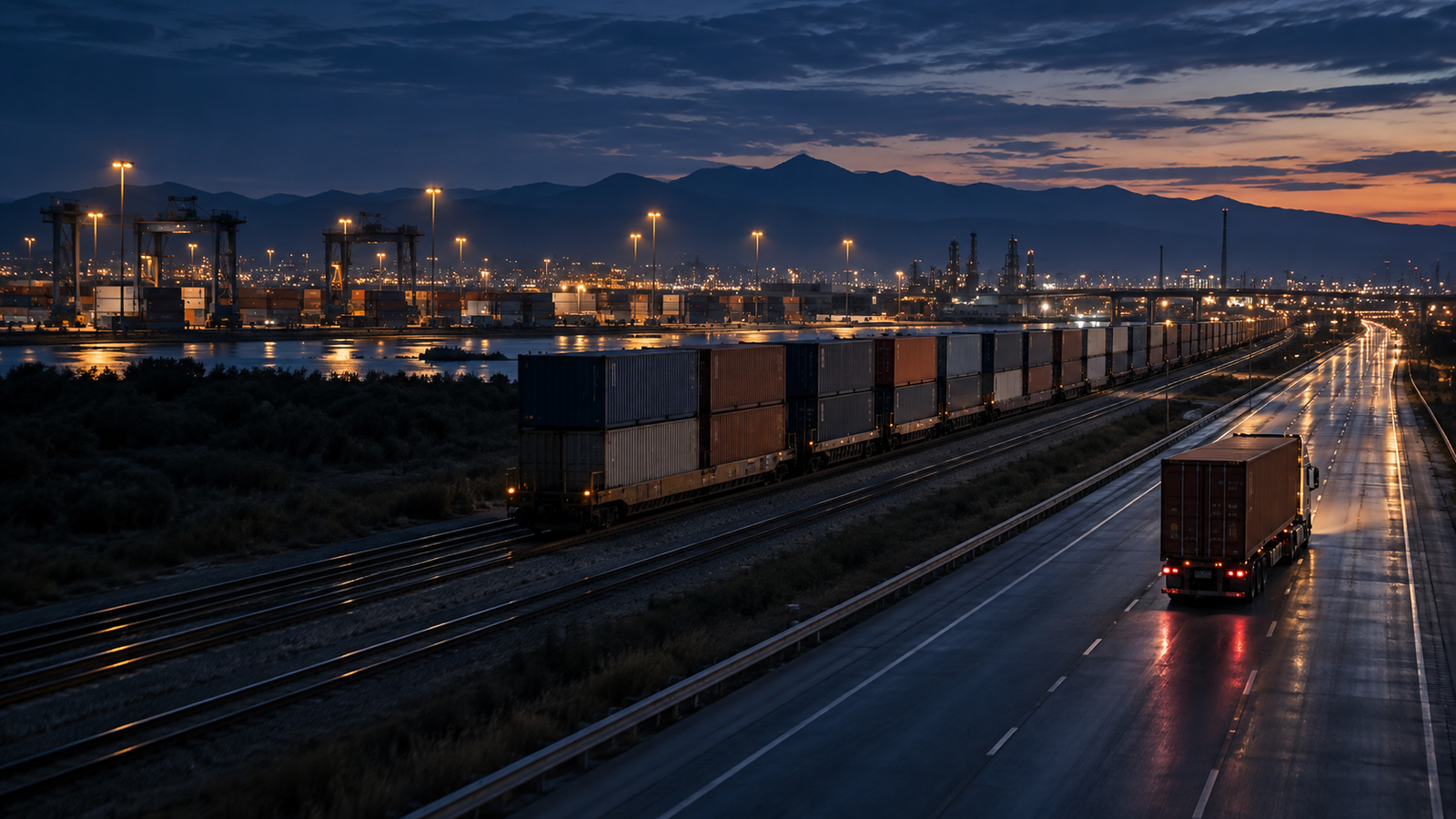
Road and rail capacity integrated around collection windows, terminal interfaces, border procedures, equipment requirements, and the delivery conditions at the final receiving point.
Land transport, connected
Inland execution is where global transport meets a specific gate, dock, terminal, border, and appointment. PORTVIA integrates road and rail capacity into the wider shipment plan while preserving control over every physical interface.
Dedicated FTL capacity for direct movement, controlled transit, high-volume loads, and shipments requiring specific trailer configuration or time-defined collection and delivery.
LTL and groupage options for smaller consignments, balancing consolidation economics with terminal handling, linehaul frequency, and predictable delivery windows.
Rail-led corridor design for long-distance inland movement, integrated with terminal drayage, unit availability, loading cut-offs, and first- and last-mile trucking.
Equipment and route planning for heavy, high, wide, long, sensitive, or non-standard cargo requiring low-bed, extendable, curtain-side, temperature-controlled, or other specialized capacity.
Road and rail performance is shaped by real operating conditions: driver hours, border queues, terminal appointments, weight restrictions, chassis availability, loading readiness, and receiving-site access.
Vehicle, trailer, chassis, rail unit, and handling configuration selected against cargo geometry, legal payload, route conditions, and site capability.
Collection and delivery sequenced with terminal, vessel, flight, and rail events so local movement protects the international routing.
Transit documents, border-office selection, customs timing, driver instructions, and handover responsibilities coordinated across jurisdictions.
Booking references, release status, gate appointments, storage exposure, chassis positioning, and unit return managed around facility requirements.
Road, rail, and intermodal alternatives considered against congestion, closures, seasonal limits, rail frequency, and border performance.
Site access, unloading equipment, booking windows, waiting-time rules, and proof-of-delivery requirements confirmed before dispatch.
What defines the corridor